
Pay less to take, get paid to make

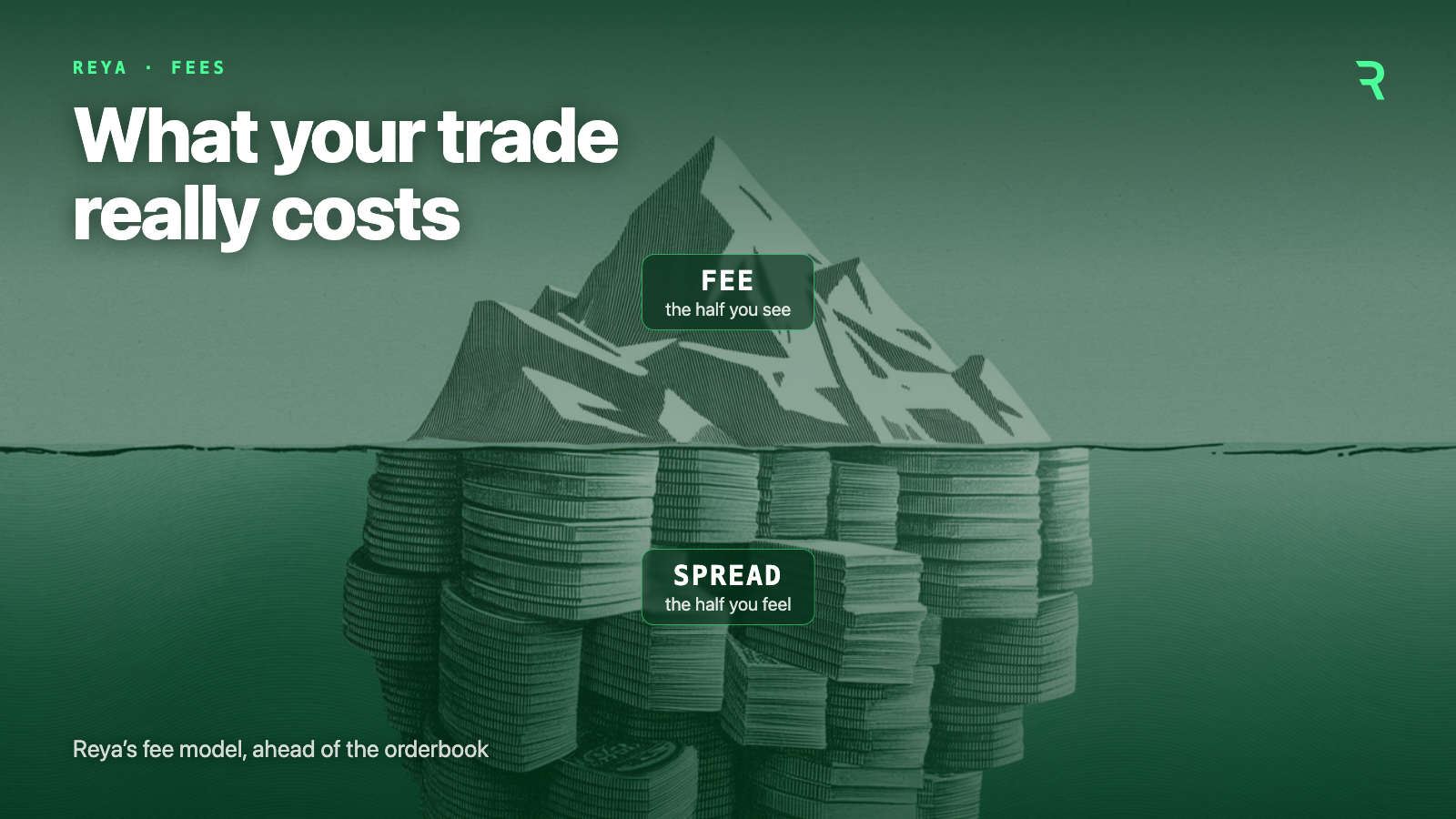
Reya's fee model, ahead of the orderbook
Every orderbook rests on a quiet bargain. For you to buy, someone has to be offering; for you to sell, someone has to be bidding. The traders posting those resting orders, the makers, are the reason there's liquidity to trade against at all. A book is only as deep as the makers willing to sit on it.
So we're building a market that pays them for it.
When Reya's orderbook launches, maker fees will be zero, and rebates for makers will follow soon after. A rebate has to be funded, and it's funded by the fee takers pay, so every market needs a taker fee before the rebate model can switch on.
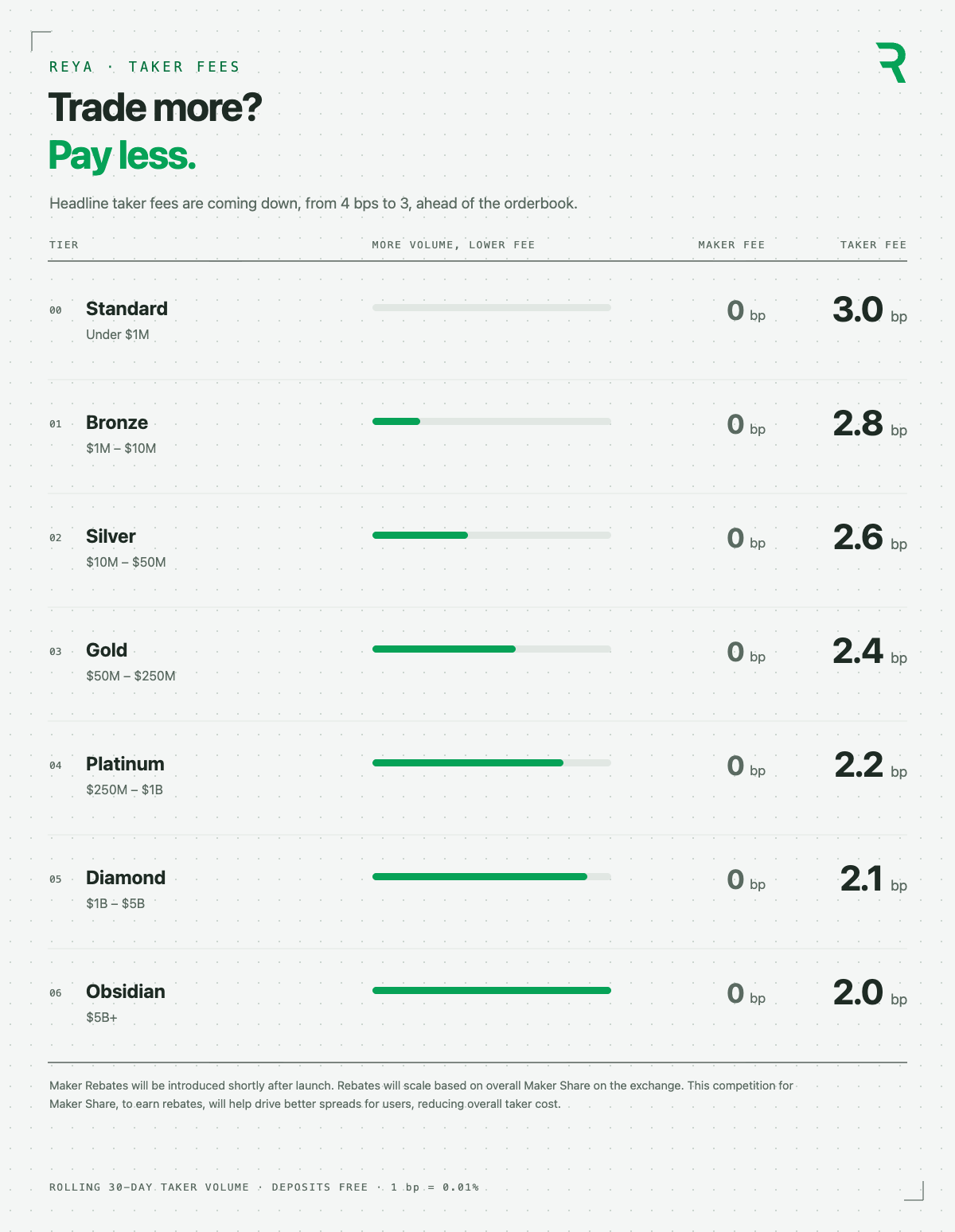
At the same time, the taker fee itself is coming down, across the board. The headline rate drops from 4 bps to 3, and as low as 2 bps once your rolling 30-day volume builds. The more you trade, the less you pay, and because the window rolls over 30 days, a quiet week won't knock you down a tier. Your OG and VLTZ discounts still apply, and in time they'll move to discounts based on your staked $REYA.
What it changes for you
- Lower fees to take: 3 bps, down from 4, and as low as 2 bps by volume.
- Payment for making: zero maker fees on the orderbook, with rebates to follow.
- Tighter spreads for everyone: rebates incentive maker competition, which naturally tightens spreads giving traders overall lower cost.
- Discounts carry over: OG and VLTZ today, replaced with staked-$REYA discounts in the future.
How this compares
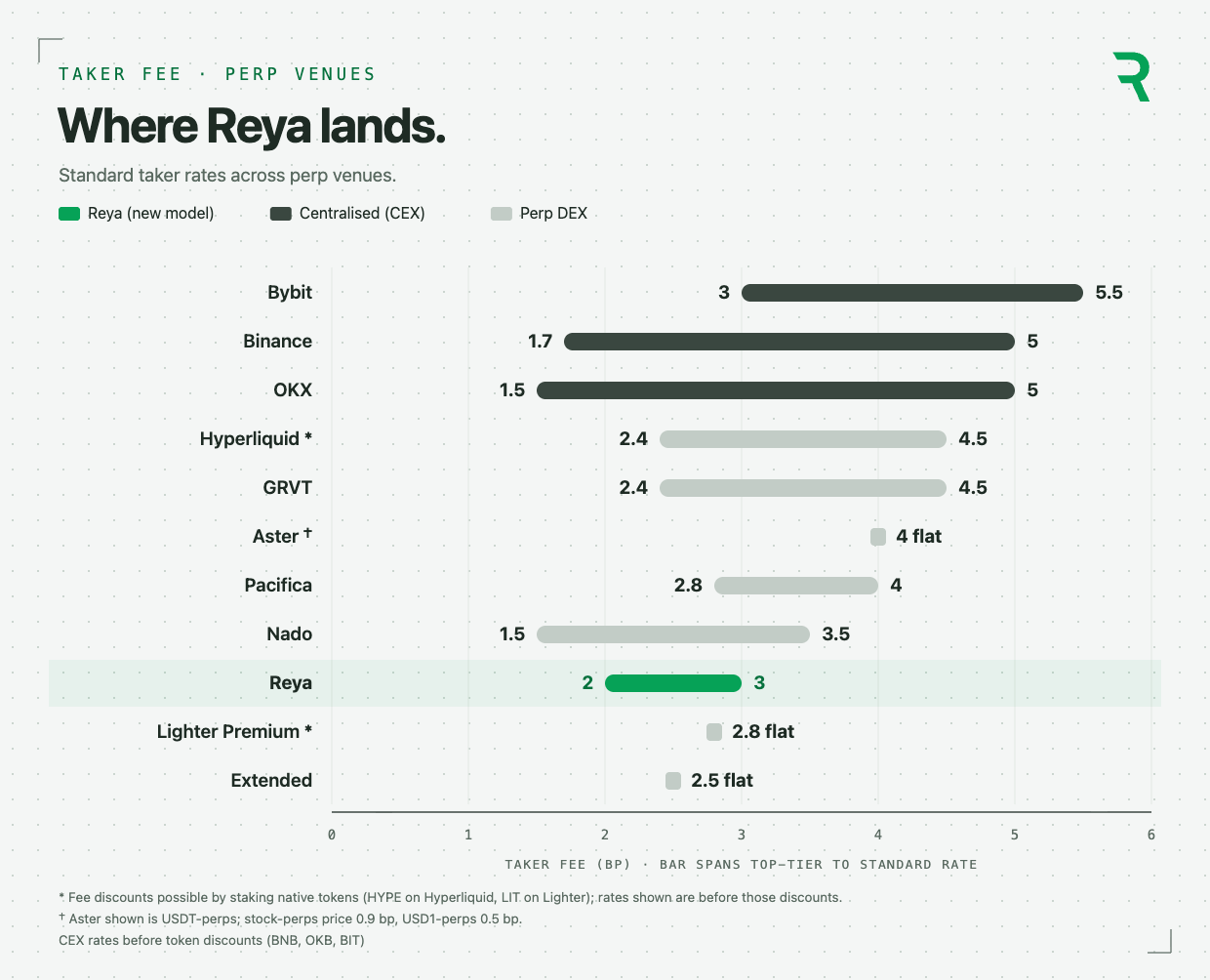
Taker fees are the part of your cost you can see. Across perp venues they run from a couple of basis points to five and more, and Reya's 3 bps standard sits at the tight end, below every centralised exchange and major perp DEXs.
The fee is only part of what a trade costs. The other part is the spread you pay, and on thin or early books that part is often the larger one. A zero fee on a wide book costs you more than a small fee on a tight one. That's what our model looks to solve: taker fees fund the maker rebates that pull spreads in, so the gross cost of a trade, fee plus spread, comes down. The fee you can see is already competitive; the cost you feel is the one we're building to win.
Why this matters
The real prize is liquidity. A deeper, tighter book means better prices and more size on every trade you make, and that depth is built by professional market makers, the firms that quote continuously at scale. They commit to venues built the way they work: maker economics that reward posting, on an orderbook quick and dependable enough to quote on. Putting that in place is what draws them, and when it does, the benefit lands with you, as tighter spreads and deeper markets. It's a real step toward the orderbook, and we'll have more to share on who's building on it before long.
Whichever side of the trade you're on, the model now moves in your favour: less to pay when you take, and soon, something to earn when you make.
All seven tiers are shown above.